Hacking refers to activities that seek to compromise digital devices, such as computers, smartphones, tablets, and even entire networks. And while hacking might not always be for malicious purposes, nowadays most references to hacking, and hackers, characterize it/them as unlawful activity by cybercriminals—motivated by financial gain, protest, information gathering (spying), and even just for the “fun” of the challenge.

What is Internet? Definition, Uses
What is Internet? Definition, Uses, Working, Advantages and Disadvantages
Internet is the foremost important tool and the prominent resource that is being used by almost every person across the globe. It connects millions of computers, webpages, websites, and servers. Using the internet we can send emails, photos, videos, messages to our loved ones. Or in other words, the internet is a widespread interconnected network of computers and electronics devices(that support internet). It creates a communication medium to share and get information online. If your device is connected to the Internet then only you will be able to access all the applications, websites, social media apps, and many more services. Internet nowadays is considered as the fastest medium for sending and receiving information.
Origin Of Internet: The internet came in the year 1960 with the creation of the first working model called ARPANET (Advanced Research Projects Agency). It allowed multiple computers to work on a single network that was their biggest achievement at that time. ARPANET use packet switching to communicate multiple computer systems under a single network. In October 1969, using ARPANET first message was transferred from one computer to another. After that technology continues to grow.
How is the Internet set up?
The internet is set up with the help of physical optical fiber data transmission cables or copper wires and various other networking mediums like LAN, WAN, MAN, etc. For accessing the Internet even the 2g, 3g, and 4g services and the wifi require these physical cable setup to access the Internet. There is an authority named ICANN (Internet Corporation for Assigned Names and Numbers) located in the USA which manages the Internet and protocols related to it like IP addresses.
How does the internet works?
The actual working of the internet takes place with the help of clients and servers. Here the client is a laptop that is directly connected to the internet and servers are the computers connected indirectly to the Internet and they are having all the websites stored in those large computers. These servers are connected to the internet with the help of ISP (Internet Service Providers) and will be identified with the IP address. Each website has its Domain name as it is difficult for any person to always remember the long numbers or strings. So, whenever you search any domain name in the search bar of the browser the request will be sent to the server and that server will try to find the IP address from the Domain name because it cannot understand the domain name. After getting the IP address the server will try to search the IP address of the Domain name in a Huge phone directory that in networking is known as a DNS server (Domain Name Server). For example, if we have the name of a person and you can easily find the Aadhar number of him/her from the long directory as simple as that.
So after getting the IP address the browser will pass on the further request to the respective server and now the server will process the request to display the content of the website which the client wants. If you are using a wireless medium of Internet like 3g and 4g or other mobile data then the data will start flowing from the optical cables and will first reach to towers from there the signals will reach your cell phones and Pc’s through electromagnetic waves. And if you are using routers then optical fiber connecting to your router will help in connecting those light-induced signals into electrical signals and with the help of ethernet cables internet reaches your computers and hence the required information.
What is an IP address?
IP address stands for internet protocol address. Every PC/Local machine is having an IP address and that IP address is provided by the Internet Service Providers (ISP’s). These are some sets of rules which govern the flow of data whenever a device is connected to the Internet. It differentiates computers, websites, and routers. Just like human identification cards like Aadhar cards, Pan cards, or any other unique identification documents. Every laptop and desktop has its own unique IP address for identification. It’s an important part of internet technology. An IP address is displayed as a set of four-digit like 192.154.3.29. Here each number on the set ranges from 0 to 255. Hence, the total IP address range from 0.0.0.0 to 255.255.255.255.
You can check the IP address of your Laptop or desktop by clicking on the windows start menu ->then right click and go to network ->in that go to status and then Properties their you can see the IP address. There are four different types of IP addresses are available:
- Static IP address
- Dynamic IP address
- Private IP address
- Public IP address
World Wide Web(WWW)
The worldwide web is a collection of all the web pages, web documents that you can see on the Internet by searching their URLs (Uniform Resource Locator) on the Internet. For example, www.geeksforgeeks.org is a URL of the GFG website and all the content of this site like webpages and all the web documents are stored on the worldwide web. Or in other words, the world wide web is an information retrieval service of the web. It provides users a huge array of documents that are connected to each other by means of hypertext or hypermedia links. Here, hyperlinks are known as electronic connections that link the related data so that users can easily access the related information and hypertext allows the user to pick a word or phrase from text, and using this keyword or word or phrase can access other documents that contain additional information related to that word or keyword or phrase. World wide web is a project which is created by Timothy Berner’s Lee in 1989, for researchers to work together effectively at CERN. It is an organization, named World Wide Web Consortium (W3C), which was developed for further development in the web.
Difference between Worldwide Web and Internet
The difference between the world wide web and the internet are:
- All the web pages and web documents are stored there on the World wide web and to find all that stuff you will have a specific URL for each website. Whereas the internet is a global network of computers that is accessed by the World wide web.
- World wide web is a service whereas the internet is an infrastructure.
- World wide web is a subset of the internet whereas the internet is the superset of the world wide web.
- World wide web is software-oriented whereas the internet is hardware-oriented.
- World wide web uses HTTP whereas the internet uses IP addresses.
- The Internet can be considered as a Library whereas all the kinds of stuff like books from different topics present over there can be considered as World wide web.
Uses of the Internet
Some of the important usages of the internet are:
- Online Businesses (E-commerce): Online shopping websites have made our life easier, e-commerce sites like Amazon, Flipkart, Myntra are providing very spectacular services with just one click and this is a great use of the Internet.
- Cashless transactions: All the merchandising companies are offering services to their customers to pay the bills of the products online via various digital payment apps like Paytm, Google pay, etc. UPI payment gateway is also increasing day by day. Digital payment industries are growing at a rate of 50% every year too because of the INTERNET.
- Education: It is the internet facility that provides a whole bunch of educational material to everyone through any server across the web. Those who are unable to attend physical classes can choose any course from the internet and can have the point-to-point knowledge of it just by sitting at home. High-class faculties are teaching online on digital platforms and providing quality education to students with the help of the Internet.
- Social Networking: The purpose of social networking sites and apps is to connect people all over the world. With the help of social networking sites, we can talk, share videos, images with our loved ones when they are far away from us. Also, we can create groups for discussion or for meetings.
- Entertainment: The Internet is also used for entertainment. There are numerous entertainment options available on the internet like watching movies, playing games, listening to music, etc. You can also download movies, games, songs, TV Serial, etc., easily from the internet.
Advantages of the Internet
- Online Banking and Transaction: The Internet allows us to transfer money online by the net banking system. Money can be credited or Debited from one account to the other.
- Education, online jobs, freelancing: Through the Internet, we are able to get more jobs via online platforms like Linkedin and to reach more job providers. Freelancing on the other hand has helped the youth to earn a side income and the best part is all this can be done via INTERNET.
- Entertainment: There are numerous options of entertainment online we can listen to music, play games can watch movies, web series, listening to podcasts, youtube itself is a hub of knowledge as well as entertainment.
- New Job roles: The Internet has given us access to social media, and digital products so we are having numerous new job opportunities like digital marketing and social media marketing online businesses are earning huge amounts of money just because the internet being the medium to help us to do so.
- Best Communication Medium: The communication barrier has been removed from the Internet. You can send messages via email, Whatsapp, and Facebook. Voice chatting and video conferencing are also available to help you to do important meetings online.
- Comfort to humans: Without putting any physical effort you can do so many things like shopping online it can be anything from stationaries to clothes, books to personal items, etc. You can books train and plane tickets online.
- GPS Tracking and google maps: Yet another advantage of the internet is that you are able to find any road in any direction, areas with less traffic with the help of GPS in your mobile.
Disadvantages of the Internet
- Time wastage: Wasting too much time on the internet surfing on social media apps and doing nothing decreases your productivity rather than wasting time on scrolling social media apps one should utilize that time in doing something skillful and even more productive.
- Bad impacts on health: Spending too much time on the internet causes bad impacts on your health physical body needs some outdoor games exercise and many more things. Looking at the screen for a longer duration causes serious impacts on the eyes.
- Cyber Crimes: Cyberbullying, spam, viruses, hacking, and stealing data are some of the crimes which are on the verge these days. Your system which contains all the confidential data can be easily hacked by cybercriminals.
- Effects on children: Small children are heavily addicted to the Internet watching movies, games all the time is not good for their overall personality as well as social development.
- Bullying and spreading negativity: The Internet has given a free tool in the form of social media apps to all those people who always try to spread negativity with very revolting and shameful messages and try to bully each other which is wrong.
What are Computer Viruses? | Definition & Types of Virus
Definition of Computer Viruses
A computer virus is a type of malicious software, or malware, that spreads between computers and causes damage to data and software.
Computer viruses aim to disrupt systems, cause major operational issues, and result in data loss and leakage. A key thing to know about computer viruses is that they are designed to spread across programs and systems. Computer viruses typically attach to an executable host file, which results in their viral codes executing when a file is opened. The code then spreads from the document or software it is attached to via networks, drives, file-sharing programs, or infected email attachments.
Common Signs of Computer Viruses
A computer virus will more than likely have an adverse effect on the device it resides on and may be discoverable through common signs of performance loss, including:
Speed of System
A computer system running slower than usual is one of the most common signs that the device has a virus. This includes the system itself running slowly, as well as applications and internet speed suffering. If a computer does not have powerful applications or programs installed and is running slowly, then it may be a sign it is infected with a virus.
Pop-up Windows
Unwanted pop-up windows appearing on a computer or in a web browser are a telltale sign of a computer virus. Unwanted pop-ups are a sign of malware, viruses, or spyware affecting a device.
Programs Self-executing
If computer programs unexpectedly close by themselves, then it is highly likely that the software has been infected with some form of virus or malware. Another indicator of a virus is when applications fail to load when selected from the Start menu or their desktop icon.
Accounts Being Logged Out
Some viruses are designed to affect specific applications, which will either cause them to crash or force the user to automatically log out of the service.
Crashing of the Device
System crashes and the computer itself unexpectedly closing down are common indicators of a virus. Computer viruses cause computers to act in a variety of strange ways, which may include opening files by themselves, displaying unusual error messages, or clicking keys at random.
Mass Emails Being Sent from Your Email Account
Computer viruses are commonly spread via email. Hackers can use other people's email accounts to spread malware and carry out wider cyberattacks. Therefore, if an email account has sent emails in the outbox that a user did not send, then this could be a sign of a computer virus.
Changes to Your Homepage
Any unexpected changes to a computer—such as your system’s homepage being amended or any browser settings being updated—are signs that a computer virus may be present on the device.
How Do Computer Viruses Attack and Spread?
In the early days of computers, viruses were spread between devices using floppy disks. Nowadays, viruses can still be spread via hard disks and Universal Serial Bus (USB) devices, but they are more likely to be passed between devices through the internet.
Computer viruses can be spread via email, with some even capable of hijacking email software to spread themselves. Others may attach to legitimate software, within software packs, or infect code, and other viruses can be downloaded from compromised application stores and infected code repositories. A key feature of any computer virus is it requires a victim to execute its code or payload, which means the host application should be running.
Types of Computer Viruses
There are several types of computer viruses that can infect devices. This section will cover computer virus protections and how to get rid of computer viruses.
Resident Virus
Viruses propagate themselves by infecting applications on a host computer. A resident virus achieves this by infecting applications as they are opened by a user. A non-resident virus is capable of infecting executable files when programs are not running.
Multipartite Virus
A multipartite virus uses multiple methods to infect and spread across computers. It will typically remain in the computer’s memory to infect the hard disk, then spread through and infect more drives by altering the content of applications. This results in performance lag and application memory running low.
Multipartite viruses can be avoided by not opening attachments from untrusted sources and by installing trusted antivirus software. It can also be prevented by cleaning the boot sector and the computer’s entire disk.
Direct Action
A direct action virus accesses a computer’s main memory and infects all programs, files, and folders located in the autoexec.bat path, before deleting itself. This virus typically alters the performance of a system but is capable of destroying all data on the computer’s hard disk and any USB device attached to it. Direct action viruses can be avoided through the use of antivirus scanners. They are easy to detect, as is restoring infected files.
Browser Hijacker
A browser hijacker manually changes the settings of web browsers, such as replacing the homepage, editing the new tab page, and changing the default search engine. Technically, it is not a virus because it cannot infect files but can be hugely damaging to computer users, who often will not be able to restore their homepage or search engine. It can also contain adware that causes unwanted pop-ups and advertisements.
Browser hijackers typically attach to free software and malicious applications from unverified websites or app stores, so only use trusted software and reliable antivirus software.
Overwrite Virus
Overwrite viruses are extremely dangerous. They can delete data and replace it with their own file content or code. Once files get infected, they cannot be replaced, and the virus can affect Windows, DOS, Linux, and Apple systems. The only way this virus can be removed is by deleting all of the files it has infected, which could be devastating. The best way to protect against the overwrite virus is to use a trusted antivirus solution and keep it updated.
Web Scripting Virus
A web scripting virus attacks web browser security, enabling a hacker to inject web-pages with malicious code, or client-side scripting. This allows cyber criminals to attack major websites, such as social networking sites, email providers, and any site that enables user input or reviews. Attackers can use the virus to send spam, commit fraudulent activity, and damage server files.
Protecting against web scripting is reliant on deploying real-time web browser protection software, using cookie security, disabling scripts, and using malicious software removal tools.
File Infector
A file infector is one of the most common computer viruses. It overwrites files when they are opened and can quickly spread across systems and networks. It largely affects files with .exe or .com extensions. The best way to avoid file infector viruses is to only download official software and deploy an antivirus solution.
Network Virus
Network viruses are extremely dangerous because they can completely cripple entire computer networks. They are often difficult to discover, as the virus could be hidden within any computer on an infected network. These viruses can easily replicate and spread by using the internet to transfer to devices connected to the network. Trusted, robust antivirus solutions and advanced firewalls are crucial to protecting against network viruses.
Boot Sector Virus
A boot sector virus targets a computer’s master boot record (MBR). The virus injects its code into a hard disk’s partition table, then moves into the main memory when a computer restarts. The presence of the virus is signified by boot-up problems, poor system performance, and the hard disk becoming unable to locate. Most modern computers come with boot sector safeguards that restrict the potential of this type of virus.
Steps to protecting against a boot sector virus include ensuring disks are write-protected and not starting up a computer with untrusted external drives connected.
Know More About Computer Viruses Through Examples
There are common examples of what computer and internet users believe to be viruses, but are technically incorrect.
Is Trojan a Virus?
A Trojan horse is a type of program that pretends to be something it is not to get onto a device and infect it with malware. Therefore, a Trojan horse virus is a virus disguised to look like something it is not. For example, viruses can be hidden within unofficial games, applications, file-sharing sites, and bootlegged movies.
Is a Worm a Virus?
A computer worm is not a virus. Worms do not need a host system and can spread between systems and networks without user action, whereas a virus requires users to execute its code.
Is Ransomware a Virus?
Ransomware is when attackers lock victims out of their system or files and demand a ransom to unlock access. Viruses can be used to carry out ransomware attacks.
Is Rootkit a Virus?
A rootkit is not a virus. Rootkits are software packages that give attackers access to systems. They cannot self-replicate or spread across systems.
Is a Software Bug a Virus?
"Bug" is a common word used to describe problems with computers, but a software bug is not a virus. A bug is a flaw or mistake in software code, which hackers can exploit to launch a cyberattack or spread malware.
How To Prevent Your Computer From Viruses
There are several ways to protect your computer from viruses, including:
Use a Trusted Antivirus Product
Trusted computer antivirus products are crucial to stop malware attacks and prevent computers from being infected with viruses. These antivirus concepts will protect devices from being infected through regular scans and identifying and blocking malware.
Avoid Clicking Pop-up Advertisements
Unwanted pop-up advertisements are more than likely to be linked to computer viruses and malware. Never click on pop-up advertisements because this can lead to inadvertently downloading viruses onto a computer.
Scan Your Email Attachments
A popular way to protect your device from computer viruses is to avoid suspicious email attachments, which are commonly used to spread malware. Computer antivirus solutions can be used to scan email attachments for potential viruses.
What Is Malware?
Malware is intrusive software that is designed to damage and destroy computers and computer systems. Malware is a contraction for “malicious software.” Examples of common malware includes viruses, worms, Trojan viruses, spyware, adware, and ransomware.
How do I protect my network against malware?
Typically, businesses focus on preventative tools to stop breaches. By securing the perimeter, businesses assume they are safe. Some advanced malware, however, will eventually make their way into your network. As a result, it is crucial to deploy technologies that continually monitor and detect malware that has evaded perimeter defenses. Sufficient advanced malware protection requires multiple layers of safeguards along with high-level network visibility and intelligence.
How do I detect and respond to malware?
Malware will inevitably penetrate your network. You must have defenses that provide significant visibility and breach detection. In order to remove malware, you must be able to identify malicious actors quickly. This requires constant network scanning. Once the threat is identified, you must remove the malware from your network. Today's antivirus products are not enough to protect against advanced cyber threats. Learn how to update your antivirus strategy.
How to Format a Laptop or Computer (8 Steps)
How to reset laptop: easy step-by-step guide to format your Windows 10, 8, or 7 PC
Not sure how to reset a laptop? We’ve got you covered. Below is the step-by-step guide on how to format Windows 10, Windows 8, and Windows 7-powered laptop/ PC. A proper factory reset can solve many problems with your laptop, including performance and strange errors, and make it brand new. You would also want to format laptop if you’re looking to upgrade it, thrash it, or reuse it. It’s worth mentioning that the factory reset will wipe all data from your computer so backup all important files and folders first. With that in mind, here’s how to reset laptop powered by Windows 10, Windows 8, or Windows 7.
How to reset Windows 10 laptop with/ without losing data
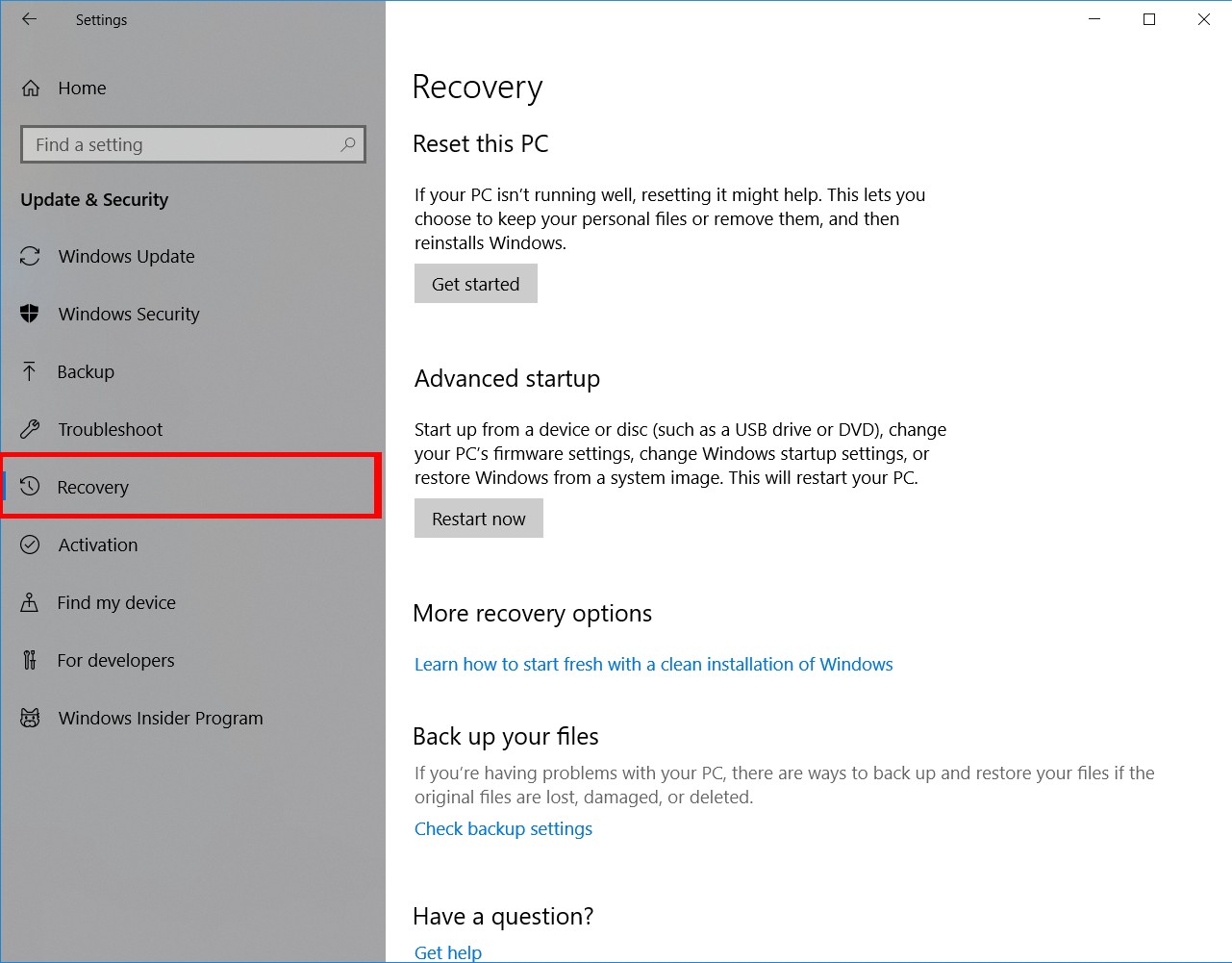
- To reset Windows 10 laptop, navigate to settings by clicking on the ‘gear’ icon on the start menu.
- Select the ‘Update & Security’ option from the menu
- Click on ‘Recovery’ in the left pane. Alternatively, you can use the laptop’s search option to look for the reset option
- You should see three options: Reset this PC, Go back to an earlier build, and Advanced startup. The Advanced setup option lets you boot off a recovery USB drive or disc, while “Go to an earlier build” is for Windows Insiders who want to roll back to a previous version of the OS. To start fresh, click on ‘Get Started’ under Reset this PC.
- The following options will appear on your screen: ‘Keep my files‘ and ‘Remove everything‘. The former will format your laptop without losing your personal files, whereas the ‘Remove everything’ will wipe all data from your computer including apps, settings, and personal files. Either way, all of your settings will return to their defaults and apps will be uninstalled.
- If you wish to remove everything click on the option, followed by ‘Remove files and clean the drive’ –> Next –> Reset –> Continue. The laptop will reset and boot automatically.
- In addition to ‘Remove files and clean the drive’, Windows 10 also gives you the option to ‘Just remove my files’, which is quicker, but less secure. It’s recommended for anyone who plans to keep the laptop.
How to format Windows 10 from the sign-in screen
If you’re having trouble logging in or you can’t access the settings menu, you can try resetting your PC from the sign-in screen. For this
- Press the ‘Windows logo key and L’ on your keyboard to log out and go to the Windows 10 sign-in screen.
- Instead of login, hold the ‘Shift’ key while you click the Power button –> Restart in the lower-right corner of the screen.
- Your PC will restart in Windows Recovery Environment (WinRE) mode.
- Select Troubleshoot>Reset this PC from the options screen
How to reset laptop (Windows 8)
The process to reset/ format Windows 8 laptop is pretty much the same as the Windows 10. You hit the Start button, then Settings –> Update & Recovery –> Recovery –> ‘Get Started’ under Reset this PC –> ‘Keep my files/ Remove my files’ –> Next –> Reset –> Continue. Whether you choose to keep your personal files or not, your laptop will reset and delete all your apps and settings. A completely fresh Windows system will load the next time your laptop starts.
How to format laptop (Windows 7) without a CD
- To reset Windows 7 laptop, click Start and select Control Panel
- Hit System and Security from the screen that pops-up
- Click Backup and Restore, followed by Recover system settings or your computer –> Advanced recovery methods
- Windows presents you with two options: ‘Restore files from a system image backup’ and ‘Return Your Computer to Factory Condition’. Click on the second option to reset your computer
- Again you’ll get a couple of options: Back up now or skip it and continue the factory reset without backing up any of your current files. Select accordingly.
- Click the Restart button to reboot your computer and to start the factory reset process.
The laptop will power off and after a few minutes restart again with the System Recovery option asking you to select a keyboard input method. Click ‘Next’ for the following options:
- Restore operation system to factory default.
- Restore operating systems and Retain user data (You still have the option to restore your data)
- Exit.
Select the first option ‘Restore operation system to factory default’ –> click ‘Next’ and again ‘Next’ and at last ‘Ok’. The system will reset and boot up again with a new copy of Windows.
How to Crack a Windows 7 password [Laptop & Desktop]
You start your Windows 7 computer, type in password on welcome screen... and an error message pops up saying the password is incorrect. Mmm... you forgotten the login password. Fortunately, you're able to regain access to the system. The instructions I've put together here will walk you through a number of troubleshooting options to crack the password on Windows 7 computer.
Crack Password: Use a Password Reset Disk
When you set up a computer, Microsoft provides a guide to help you create a Windows 7 password reset disk in case you have come across the need to bypass the lost password and login to your computer. So if you've already done so and have the disc in hand, resetting (cracking) Windows 7 password right on the lock screen is fairly simple and all you really need is just a few clicks.
Before you start, make sure you have the password reset disk inserted into your PC.
- On Windows 7 lock screen, click Reset password option under password field. Click Next.
- Click the drop-down menu, and select the drive your reset disk is located in. Click Next.
- Type in a new password and password hint.
- Click Finish and restart your computer.
The forgotten password to your Windows 7 account has been cracked! Now you can log into the Windows with new password you just created.
Crack Password: Use Windows 7 Password Cracker
Aside from using a password reset disk you've made previously to bypass the lock screen, there're other ways to crack the password for Windows 7. And one of the most efficient ways is utilize a Windows 7 password cracker tool, which is specifically designed to reset or unlock lost user and administrator passwords used to log onto Windows operating systems.
While the web is full of paid and free Windows 7 password cracking programs available, we prefer using a utility named Spower Windows Password Reset. It's simple and straightforward, letting you create a password reset disc and crack a forgotten password for Windows in a fast way. It works with both 32-bit 64-bit versions of Windows, including XP, Vista, 7, 8, and Windows 10.
How to Factory Reset an Android Phone or Tablet
This wikiHow teaches you how to reset your Android device to its factory settings using either a basic reset or if you're experiencing more serious issues, recovery mode.
1
Open your device's Settings. It's often a gear-shaped icon (⚙️) or an icon containing a series of slider bars.
2
Scroll down and tap Backup & reset. It's in either the Personal or Privacy section of the menu, depending on device and Android version.
- If you are on a Samsung Galaxy device, instead tap General Management and then tap Reset.
3
Tap Factory data reset. It's at the bottom of the menu.
Tap Reset Phone. Once the reset process is complete, your phone will be formatted as it was when it left the factory.
- If you are on a Samsung Galaxy device, instead tap Reset.
Tap Erase everything to confirm. This will immediately erase all of the phone's data and reboots to the factory default settings and configuration. The process can take several minutes.
- If you are on a Samsung Galaxy device, instead tap Delete All.
Subscribe to:
Posts (Atom)